вторник, 22 января 2019 г.

Il gattopardo / The Leopard (1963) 3 x DVD9 and 2 x Blu-Ray Criterion Collection

Il gattopardo / The Leopard (1963) Criterion Collection
To best appreciate The Leopard, it is important to understand the political undercurrents of the film. Italy, circa 1859, was a fragmented collection of independent states, each controlled by different ruling interests. The Papal states resided in central Italy. Towards the south, King Ferdinand II ruled over the Bourbon states of Naples and Sicily. The Savoy States were ruled by Victor Emmanuel. Austria, after the Napoleonic Wars, had seized control of Northern Italy.
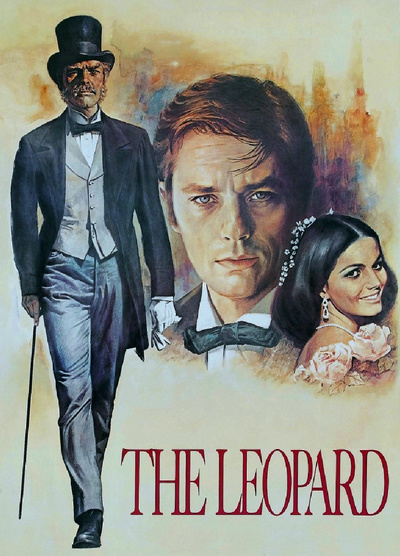
The film takes place during the heart of the Italian Risorgimento, a time of nineteenth-century social upheaval in which the Italian states rebelled against the existing aristocratic order to form a unified and democratic Italy. Burt Lancaster plays Don Fabrizio, the proud yet aging Prince of Salina, emblematic of the old society and yet fully aware that his way-of-life is slowly fading into oblivion. Garibaldi, who is attempting to unite all of Italy into one nation, has landed in Sicily, and even his adored nephew, Tancredi (Alain Delon), who he has fancied to be his successor, has joined his army. The film follows events in the lives of the Prince of Salina and his family.

Director: Luchino Visconti
Cast: Burt Lancaster, Alain Delon, Claudia Cardinale, Terence Hill
Country: Italy, France
Genre: Drama, History

Читать дальше...

Read more / Download movie Originally published at MovieWorld.ws

четверг, 20 декабря 2018 г.

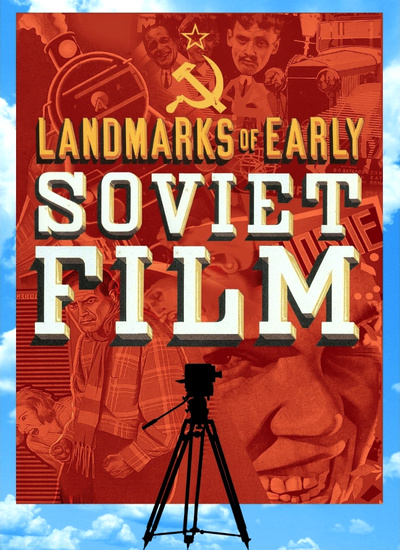
Landmarks of Early Soviet Film: Old and New (1929), The Extraordinary Adventures of Mr. West in the Land of the Bolsheviks (1924), The House on Trubnaya (1928), By the Law (1926), Stride, Soviet! (1926), The Fall of the Romanov Dynasty (1927), Turksib (1930), Salt for Svanetia (1930) 4 x DVD

Landmarks of Early Soviet Film
The 1920s was a miraculous golden age for Soviet cinema, both for features and documentary. The eight films included in this meticulously curated and handsomely presented collection convey the incredible excitement filmmakers felt at the opportunity to participate in the construction of the world's first socialist state. Freed from the need to make money that drove the Hollywood industry, they could focus on "educating" the new Soviet population. Even Vladimir Ilych Lenin, the father of the 1917 Bolshevik Revolution and the first leader of the country that would become the U.S.S.R., understood that cinema, an art based on technology and machines, was the most suitable one for a country founded on the transformation of humanity through industry and technology. Cinema was nothing less than "the most important art," Lenin famously declared. Experimentation was the order of the decade.

The set consists of eight movies, four fiction and four documentaries from the very best Soviet filmmakers. Each has a nifty new musical score, using both previously composed and original material.
All the films have original Russian intertitles with English subtitles (which are removable on four of the films), except Turksib and The Fall of the Romanov Dynasty, which have full-screen English intertitles.

Читать дальше...

Read more / Download movie Originally published at MovieWorld.ws
вторник, 18 декабря 2018 г.

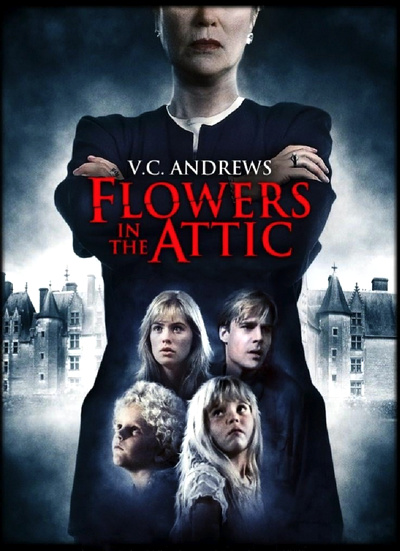
Flowers in the Attic (1987) Blu-Ray

Flowers in the Attic 1987
The Dollanganger family is shattered when the father of the house dies, leaving them destitute. The only hope lies in their mother Corinne returning and winning favour with her dying father who disinherited her after she left home. Once there, the cruel and autocratic grandmother takes the four children and locks them in a room in the attic. Their mother goes along with this, telling them to wait until she is successful in her entreaty. However, as days draw into months, their mother's visits become scarcer and they are sometimes forced to go without food for a long time. Managing to find a way to sneak in and out of the attic, they find that their mother is planning to marry another man and is now sprinkling arsenic on their food to kill them off.

Author Virginia C. Andrews had a best-seller with her first novel, the Gothic horror story Flowers in the Attic (1979), which was purportedly based on a true story.

This story had a great deal of potential, perhaps not in the horror genre as current define but certainly as a psychological thriller. Sadly, the movie shies away from what made Flowers in the Attic such a hugely popular book - namely, the incestuous sex that began between the two older children.

Читать дальше...

Read more / Download movie Originally published at MovieWorld.ws
воскресенье, 16 декабря 2018 г.

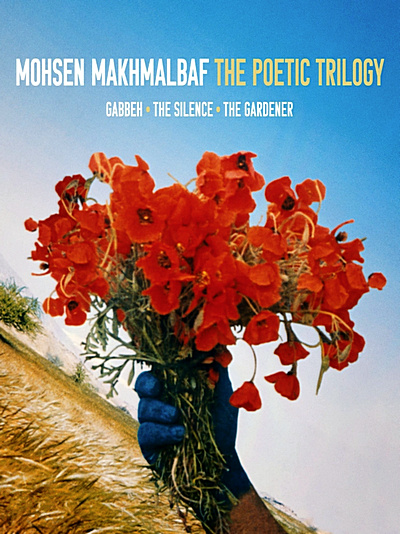
Mohsen Makhmalbaf: The Poetic Trilogy: Gabbeh (1996), Sokout / The Silence (1998), The Gardener (2012) 2 x Blu-Ray Arrow Academy

Mohsen Makhmalbaf The Poetic Trilogy
Mohsen Makhmalbaf is a revolutionary filmmaker in every sense. Iranian by birth but, becoming a persona non grata in his homeland, he made more than 30 films in 11 different countries, and is now recognised as Iran's most important filmmaker. Except in Iran, where all his work is now banned, and it's forbidden to mention his name or even refer to his work in the media.

The pain that lingers beneath the surface of Mohsen Makhmalbaf's "Poetic Trilogy" emanates from a careful melding of the cinematic image and the sociopolitical realities of daily life in Iran. These films often convey a political perspective without dipping into explicit rhetoric that indicates them as speaking to, or about, a current state of affairs in Iran.

Nor does the "poetic" mean precisely the same thing in each film. The striking colors and compositions of Gabbeh stand in stark contrast to the low-grade digital images of 2012's The Gardener, which explores religious devotion through the framework of a DIY, reflexive documentary. And 1998's The Silence finds its own poetry in music and sound.

Читать дальше...

Read more / Download movie Originally published at MovieWorld.ws
Mohsen Makhmalbaf: The Poetic Trilogy: Gabbeh (1996), Sokout / The Silence (1998), The Gardener (2012) 2 x Blu-Ray Arrow Academy

Mohsen Makhmalbaf The Poetic Trilogy
Mohsen Makhmalbaf is a revolutionary filmmaker in every sense. Iranian by birth but, becoming a persona non grata in his homeland, he made more than 30 films in 11 different countries, and is now recognised as Iran's most important filmmaker. Except in Iran, where all his work is now banned, and it's forbidden to mention his name or even refer to his work in the media.

The pain that lingers beneath the surface of Mohsen Makhmalbaf's "Poetic Trilogy" emanates from a careful melding of the cinematic image and the sociopolitical realities of daily life in Iran. These films often convey a political perspective without dipping into explicit rhetoric that indicates them as speaking to, or about, a current state of affairs in Iran.

Nor does the "poetic" mean precisely the same thing in each film. The striking colors and compositions of Gabbeh stand in stark contrast to the low-grade digital images of 2012's The Gardener, which explores religious devotion through the framework of a DIY, reflexive documentary. And 1998's The Silence finds its own poetry in music and sound.

Читать дальше...

Read more / Download movie Originally published at MovieWorld.ws

Mohsen Makhmalbaf: The Poetic Trilogy: Gabbeh (1996), Sokout / The Silence (1998), The Gardener (2012) 2 x Blu-Ray Arrow Academy

Mohsen Makhmalbaf The Poetic Trilogy
Mohsen Makhmalbaf is a revolutionary filmmaker in every sense. Iranian by birth but, becoming a persona non grata in his homeland, he made more than 30 films in 11 different countries, and is now recognised as Iran's most important filmmaker. Except in Iran, where all his work is now banned, and it's forbidden to mention his name or even refer to his work in the media.

The pain that lingers beneath the surface of Mohsen Makhmalbaf's "Poetic Trilogy" emanates from a careful melding of the cinematic image and the sociopolitical realities of daily life in Iran. These films often convey a political perspective without dipping into explicit rhetoric that indicates them as speaking to, or about, a current state of affairs in Iran.

Nor does the "poetic" mean precisely the same thing in each film. The striking colors and compositions of Gabbeh stand in stark contrast to the low-grade digital images of 2012's The Gardener, which explores religious devotion through the framework of a DIY, reflexive documentary. And 1998's The Silence finds its own poetry in music and sound.

Читать дальше...

Read more / Download movie Originally published at MovieWorld.ws

Mohsen Makhmalbaf: The Poetic Trilogy: Gabbeh (1996), Sokout / The Silence (1998), The Gardener (2012) 2 x Blu-Ray Arrow Academy

Mohsen Makhmalbaf The Poetic Trilogy
Mohsen Makhmalbaf is a revolutionary filmmaker in every sense. Iranian by birth but, becoming a persona non grata in his homeland, he made more than 30 films in 11 different countries, and is now recognised as Iran's most important filmmaker. Except in Iran, where all his work is now banned, and it's forbidden to mention his name or even refer to his work in the media.

The pain that lingers beneath the surface of Mohsen Makhmalbaf's "Poetic Trilogy" emanates from a careful melding of the cinematic image and the sociopolitical realities of daily life in Iran. These films often convey a political perspective without dipping into explicit rhetoric that indicates them as speaking to, or about, a current state of affairs in Iran.

Nor does the "poetic" mean precisely the same thing in each film. The striking colors and compositions of Gabbeh stand in stark contrast to the low-grade digital images of 2012's The Gardener, which explores religious devotion through the framework of a DIY, reflexive documentary. And 1998's The Silence finds its own poetry in music and sound.

Читать дальше...

Read more / Download movie Originally published at MovieWorld.ws